
• Home
  • Psychology
  • Economics
  • Summaries
  • Infographics
  • Archives
  • Contact

Social Commerce Today

with Digital Innovation Today

  • Social
  • Mobile
  • Retail
  • Things
  • Data

Speed Summary: The Science of Persuasion

0
  • by Paul Chaney
  • in Insights · Psychology · Social · Summaries
  • — 9 Feb, 2012

Dr. Robert B. CialdiniOne of the most popular posts here at SCT deals with the psychology of social shopping. In it, Dr. Paul Marsden, Editor of Social Commerce Today, references six heuristics (mental rules of thumb) that shoppers use, often intuitively, to make purchase decisions.

The father of this heuristic thinking model is Dr. Robert B. Cialdini, an academician best known for his popular book on persuasion and marketing, Influence: The Psychology of Persuasion.

This speed summary outlines the content of an article published in Scientific American in February 2001, entitled “The Art of Persuasion,” where Dr. Cialdini addresses each of the six heuristics within the context of how these subtle psychological pressures can be used to get people to say yes to requests. These six tendencies are: reciprocation, consistency, social validation, liking, authority and scarcity.

1. Reciprocation

Rule: All societies subscribe to a norm that obligates individuals to repay in kind what they have received.

Example: Charitable organizations often use this heuristic approach to increase donations. A free gift, even one that is unsolicited, exerts a powerful influence on the amount and percentage of donations received.

Reciprocity includes more than gifts and favors. It also applies to concessions that people make to one another. Large requests that may tend to be rejected are replaced by smaller ones that are accepted.

2. Consistency

Rule: Public commitments, even seemingly minor ones, direct future action.

Example: Fundraisers in Israel nearly doubled monetary contributions for the handicapped in certain neighborhoods where donations were being solicited. Consistency played a role due to the fact that, two weeks prior, residents had been asked to sign a petition stating their support of the handicapped.

3. Social Validation

Rule: A fundamental way that we decide what to do in a situation is to look to what others are doing or have done.

Example: Stopping to gaze skyward, even for no apparent reason, will induce others to follow suit. The greater number of people engaged in the activity served to further validate the reasonableness of the action.

If many individuals have decided in favor of a particular idea, we are more likely to follow because we perceive it to be more correct.  Taking advantage of social validation, requesters can stimulate our compliance by demonstrating (or merely implying) that others just like us have already complied

Social validation can have an adverse, negative effect, however.  For instance, health educators who call attention to a problem – smoking or alcohol abuse – by depicting it as a regrettable, but frequent behavior can backfire to generate even more occurrences of the undesirable behavior.

4. Liking

Rule: “Liking” something, a behavior familiar to social networkers, builds on the influence of personal connections. People prefer to say yes to those they like.

Example: For years, Tupperware has relied on its “home party” program as a vehicle to increase sales. The in-home get togethers make potential customers feel as though they are buying from a friend, the host, rather than from an unknown salesperson.

Physical attractiveness can also be a element that contribute to liking. A 1993 study found that attractive fundraisers for the American Heart Association generated nearly twice as many donations (42 versus 23 percent) as did others who were not so good-looking.

Other factors that increase liking activity include similarity, compliments and cooperation.

5. Authority

Rule: Experience, expertise or scientific credentials harness the power of authority.

Example: “Four out of five doctors agreed…”

The authority heuristic can have an adverse effect when consumers are subjected to phony claims presented by so-called authority figures (celebrities, for example) who merely represent a product and who are not, in fact, experts on the topic.

6. Scarcity

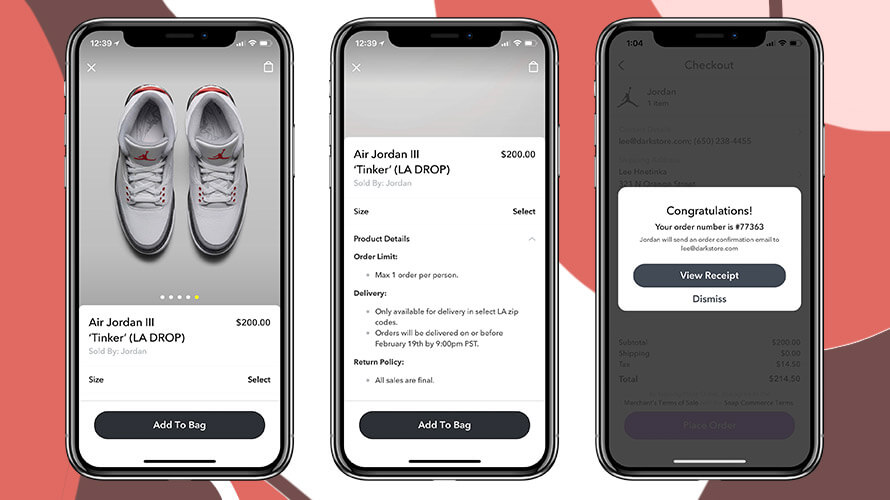
Rule: Items and opportunities become more desirable as they become less available.

Example: Marketers use of one-of-a kind or limited-time offers.

Scarcity affects the value not only of commodities but of information as well.

Cultural Differences Play a Role

Even though the six heuristics operate similarly across national boundaries, which one plays the most significant role in influencing decision-making differs by culture. Citing a Stanford University study that measured employees’ willingness to voluntarily comply with a request for assistance from a co-worker, Dr. Cialdini found that US employees took a reciprocation approach whereas Chinese employees responded primarily to authority.

Conclusion

Dr. Cialdini remarked that it makes sense to repay favors, behave consistently, follow the lead of similar others, favor the requests of those we like, heed legitimate authorities and value scarce resources. By understanding the various dynamics present in these persuasion techniques, marketers can begin to recognize strategies and truly analyze requests and offerings.

He adds that persuasion professionals must be held accountable for the use of the six motivators so as not to manipulate consumers in a manner that is unethical or untruthful.

Share this:

Share

— Paul Chaney

Leave a Reply Cancel reply

Your email address will not be published. Required fields are marked *

*

*

HTML tags are not allowed.

  • Previous story R.E.A.D.Y for Popup Shops?
  • Next story Will Facebook’s Real Business Model Please Stand Up
    • Recent Posts
    • Most Popular
    • screenshot_1894Warren Buffet “If you lose money for the firm I will be understanding. If you lose reputation I will be ruthless.” Course Deck on Reputation Management and Social Media [Download]May 16, 2013
    • did_visual_english-1Post-PC Era by the Numbers: List of Top Post-PC StatsMay 14, 2013
    • Tesco-Co-BuyWorld’s Third Largest Retailer, Tesco Launches New Social Commerce Wine SiteMay 9, 2013
    • chiefdodoballmerChief Dodo Ballmer: What Social Commerce Can Learn from Windows 8May 8, 2013
    • social_commerce_social_psychologyHow Social Commerce Works: The Social Psychology of Social ShoppingDecember 6, 2009
    • f-commercef-commerce statistics roundup: Facebook commerce by the numbersApril 4, 2011
    • FBStoreTop 50 Facebook Stores, Top 20 Facebook Store SolutionsMarch 11, 2011
    • screenshot_1559A Year in Social Commerce [infographic]December 30, 2010
  • About SCT

    Social Commerce Today is the leading online publication for news, comment and analysis in the field of social commerce, the art and science of selling with social technology.
  • About SYZYGY Group

    We're a network of specialist digital agencies. We create branded digital experiences designed to enrich the lives of people and the companies that serve them.
  • Check out what we do

    Ars Thanea


    HIRES


    Syzygy


    Unique_Digital

  • Download Our Latest Research Report

    Marsden_Digital_POS

  • Home
  • Insights
  • Speed Summary: The Science of Persuasion

© COPYRIGHT 2013 SOCIAL COMMERCE TODAY